

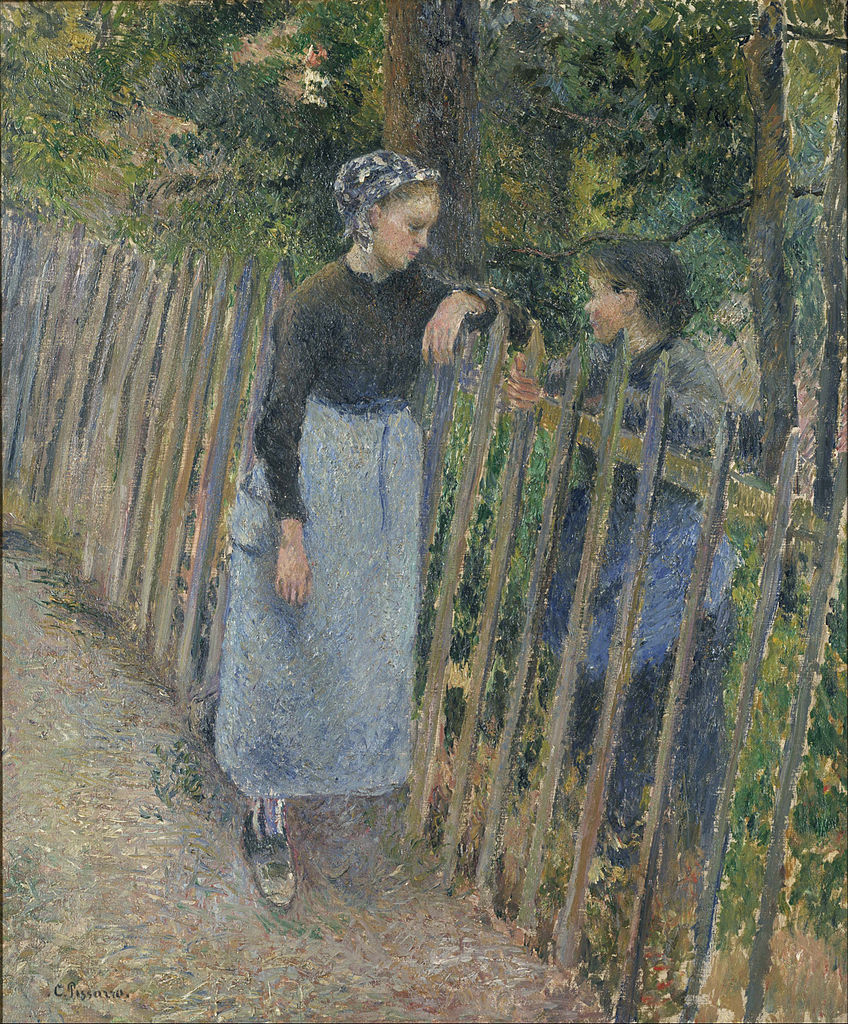
 Most people, most of the time, treat conversation as a form of information exchange. You tell me what you're having for dinner tonight, I tell you what I did at work today, you tell me where you went on your vacation, etc. The assumption is: the value of connection comes from the content we exchange.
Similarly, when communication doesn't work or a relationship falls flat, we often blame the content. "They don't care about things that interest me." "We never talk about deep stuff."
While there is some value in shared interests, much research has pointed to the far greater value of non-verbal cues in the overall experience of communication. Psychologist Albert Mehrabian famously discovered that in communications of our attitudes and opinions, only 7% of the meaning comes from the words themselves. The rest is embedded in our facial expressions and body language. More recent research has pointed out that when we are most deeply connected, we feel each other’s feelings in our own bodies—this is true empathy.



 The holidays are fast approaching, and many of us are heading home to spend time with family. For some, this means confronting challenging political views and challenging interpersonal dynamics. As far as mindfulness is concerned, these are the moments where the rubber meets the road!

 As humans, we are evolutionarily wired to avoid what is uncomfortable or unknown. Mindfulness is counterintuitive in that it trains us to turn toward discomfort, allowing it to be just as it is (