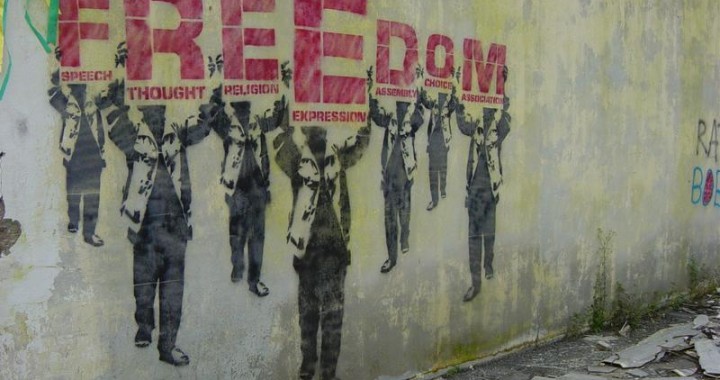
 To me, “freedom” is a particularly useful word to describe the long-term goal of mindfulness practice. But what does that word really mean? To keep “freedom” tangible and relevant, I like to move through my life asking, “how am I NOT free in this moment?” Often the answer is surprising. As an illustration, consider the example of hearing the unintentionally harsh words of a friend…
Am I free to feel the hurt (sadness, embarrassment) caused by the harsh words, or am I compelled to space out or ruminate angrily? Perhaps I am free to feel the hurt, but am I fully free to speak up in defense of my principles? Perhaps I am free to speak up in defense of my principles, but am I free to do it in a way that is kind and without anger? Perhaps I am free to speak up kindly, but am I free to walk away from that experience without resentment? Perhaps I am free to walk away without resentment, but am I free to maintain a fully accepting relationship with this friend, should that seem the best choice? Perhaps I am free to maintain that relationship, but am I free NOT to maintain it, investing less energy in it if in fact it seems unhealthy?
Freedom is a moving target. In each moment, as conditions change, there are new opportunities to let go and new opportunities to be stuck. New opportunities to choose, and new opportunities to humbly acknowledge the limitations on our freedom of choice. How are you not free in this moment?

 There is nothing wrong with the part of you that feels sad, scared, or alone. There is nothing wrong with the part of you that doesn’t understand. There is nothing wrong with the part of you that desires things or people. There is nothing wrong with the part of you that wants to run from others, even when what you need most is to connect.
 I was doing forgiveness practice this morning, and an old, important memory from childhood arose. It was an uncomfortable exchange in which I felt scared and sad—one of tens of thousands of early experiences (good and bad) which mix together to form the overall sense of self and world that underlies an adult personality.
 As I move into more authenticity in my relationships, I often notice and talk about the hard parts: the fear of rejection/abandonment, and the sadness of old, unprocessed loss. However, an unexpected benefit on this journey has been a shift in values, from pinning my worth on other people’s acceptance of me, to assessing myself on the basis of my own internal congruence: How complete have I been? How fully have I represented myself? Have I left anything unsaid? Have I been kind, and in accord with my principles?